Understanding the Radon Risk in York County Homes
When I bought my first house in York, Pennsylvania, radon wasn't on my radar. The home inspection turned up the usual suspects: aging HVAC, a few leaky windows, and some minor settling cracks in the foundation. Nobody mentioned the invisible gas that can seep through those very cracks. It wasn't until a neighbor mentioned testing their basement that I started looking into radon mitigation in York PA, and what I found surprised me.
Radon gas is a natural byproduct of uranium decay in soil and rock. It moves up through the ground and into buildings through openings in the foundation. York County sits on geologic formations that can produce elevated radon levels. The EPA has identified much of Pennsylvania as Zone 1, meaning average indoor radon levels are predicted to exceed the action level of 4 picocuries per liter. That doesn't mean every home in York has a problem, but it does mean ignoring the possibility is a gamble with your health.
Testing Is the Only Way to Know
You cannot see, smell, or taste radon. The only way to know if your home has a problem is to measure it. Radon test kits are affordable and widely available. I picked one up at a local hardware store for under twenty dollars. You place the kit in the lowest livable area of your home, leave it for the recommended time, and mail it to a lab. Results come back in a few weeks.
Short-term tests are a good starting point, but radon levels can vary day to day and season to season. The EPA recommends a long-term test, lasting three months to a year, for a more accurate picture. If your initial test shows levels at or above 4 pCi/L, the EPA says you should take action. And that action usually involves some form of radon measurement followed by a mitigation system designed to keep the gas out.
For homeowners in York, the Pennsylvania DEP also offers guidance and a list of certified radon contractors. Testing is the cheap part. Fixing the problem can cost more, but it is far cheaper than the long-term health consequences of prolonged exposure.
How Radon Gets In
Radon enters homes through any opening between the building and the ground. That includes cracks in concrete slabs, gaps around pipes, sump pump openings, and even the porous surface of exposed dirt in crawl spaces. The pressure inside a house is usually slightly lower than the pressure in the soil beneath it, so the house acts like a vacuum, pulling radon gas in through every available gap.
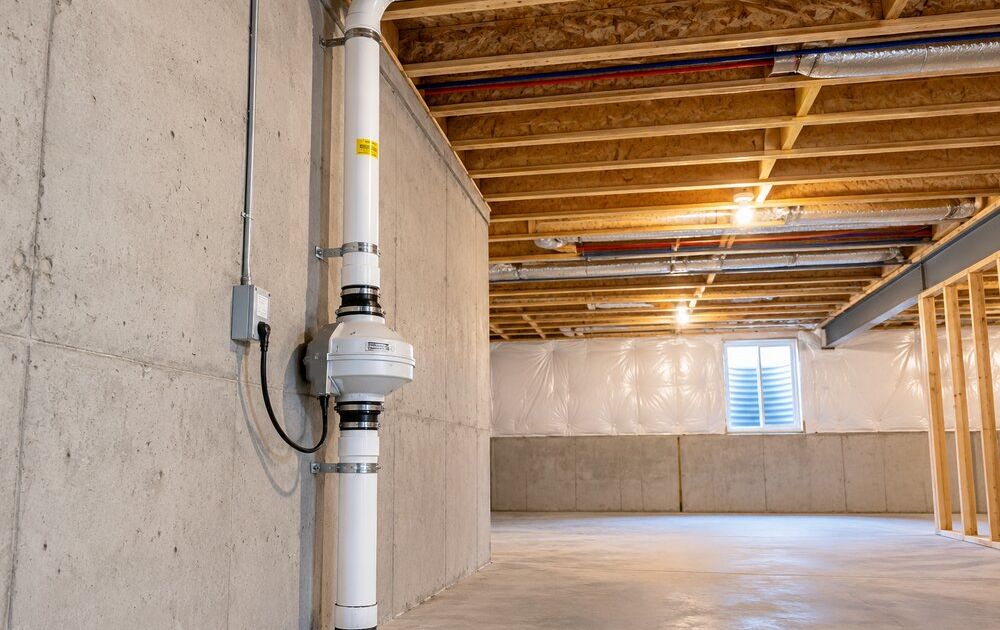
In older homes in York, especially those built before radon-resistant construction became common, the foundation may have settled, creating more pathways for the gas. Newer homes are not immune either. Even with a vapor barrier and sealed concrete, radon can find a way in if the builder did not include passive radon systems during construction.
Mitigation Options That Actually Work
Once you confirm elevated radon levels, the next step is to install a mitigation system. The most common and effective method for homes with a basement or slab-on-grade foundation is sub-slab depressurization, also called active soil depressurization. A pipe is inserted through the foundation floor into the gravel layer below. A radon fan mounted outside or in the attic creates suction, drawing radon gas from beneath the house and venting it safely above the roofline.
A typical system includes a manometer, a U-tube gauge that shows whether the fan is running and the system is under pressure. You can check it at a glance, which is reassuring. Most local radon contractors will also provide a radon mitigation warranty, often covering the system for five years, as long as you follow maintenance guidelines like keeping the fan running and not blocking the vent pipe.
For homes built on a crawl space, the approach is similar but the pipe runs through a sealed membrane laid over the dirt floor. In houses with a sump pump, you can install a sealed cover and vent the sump pit to the outside, sometimes called sump pump radon mitigation. Sealing foundation cracks is an important step, but it is rarely enough on its own. The EPA points out that sealing alone does not reliably reduce radon levels, because the gas can still enter through porous concrete or tiny gaps you cannot see.
There is also the option of passive radon systems, which rely on natural pressure differences and stack effect to vent radon without a fan. These are often installed in new construction as a low-cost preventive measure. But in existing homes with elevated levels, passive systems rarely provide enough suction. Active systems with a dedicated radon fan are almost always the better choice for existing homes.
Radon in Water: Another Piece of the Puzzle
If your home uses well water, radon can also enter through the water supply. Radon in water testing is a separate process from air testing. The EPA estimates that about 1 percent of the radon in indoor air comes from water, but that number can be much higher in homes with private wells drilled into uranium-bearing rock. If your water test shows elevated levels, a point-of-entry treatment system, usually a granular activated carbon filter or aeration unit, can remove the radon before it reaches your taps.
Most municipal water systems in York treat their water to reduce radon, so if you are on public water, this is rarely a concern. But if you are on a private well, include a water test in your overall radon assessment.
Real Estate and Disclosure in York
Real estate radon disclosure rules vary by state. In Pennsylvania, sellers are not legally required to disclose radon test results unless the buyer specifically asks. But many buyers now include a radon test contingency in their offer, and lenders in some cases require it. If you are selling a home in York and you have already installed a mitigation system, that can be a selling point. Buyers appreciate knowing the home has been tested and fixed. If you are buying, do not skip the test. It is a small investment compared to the cost of a mitigation system after you close.
Working With Local Radon Contractors
Radon mitigation in York PA is not a DIY job for most homeowners. The systems require careful placement of the suction point, proper sealing of the floor, and correct installation of the vent pipe and fan. A poorly installed system can actually make the problem worse by drawing radon from a larger area without venting it effectively. That is why I recommend working with certified local radon contractors who know the soil conditions and common foundation types in York County.
The Pennsylvania DEP maintains a list of certified radon professionals. When you call a contractor, ask about their experience with homes similar to yours. A good contractor will perform a site visit, review your test results, explain the proposed system, and provide a written estimate that includes a radon mitigation warranty. They should also install a manometer so you can monitor the system yourself.
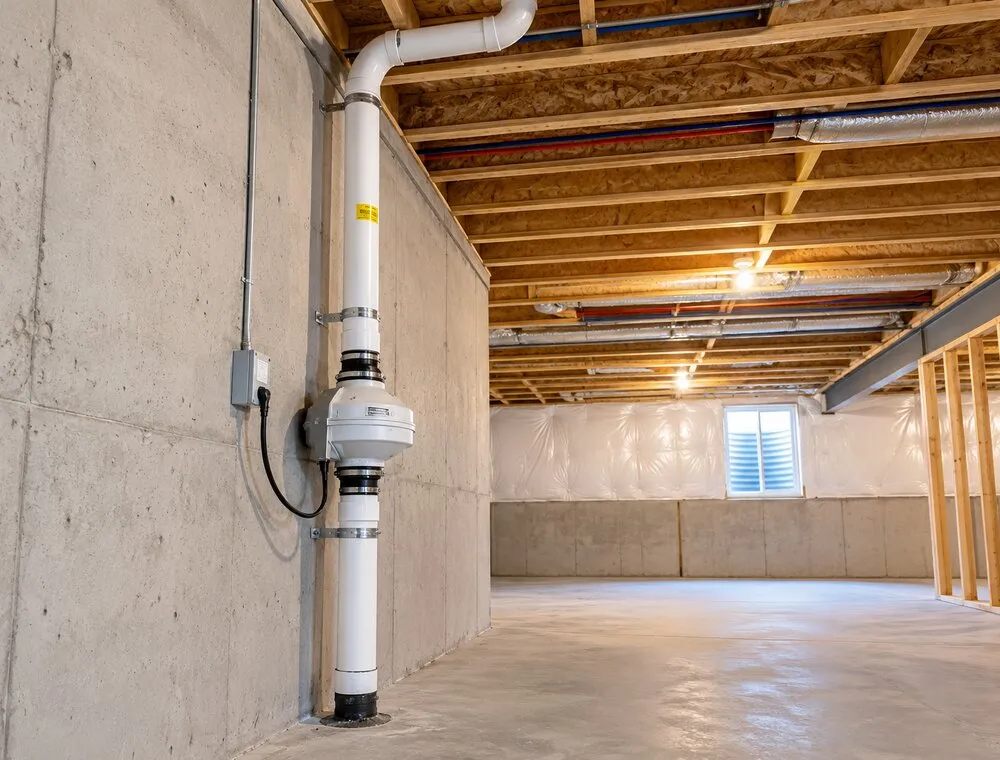
I have seen homes where the mitigation system cut radon levels from 12 pCi/L down to below 1 pCi/L. That kind of reduction is common when the system is designed and installed correctly. The cost for a typical active soil depressurization system in York runs between $800 and $1,500, depending on the complexity of the installation. That is a small price for peace of mind.
A Little History and a Practical Outlook
York has a long history, from its role in the American Revolution as the temporary capital of the Continental Congress to its industrial growth in the 19th and 20th centuries. Many of the older homes in the city and surrounding towns reflect that history, with stone foundations, fieldstone basements, and crawl spaces that were never designed with radon in mind. That makes radon mitigation in York PA a topic that touches both preservation and public health.
Whether you live in a historic rowhouse in the city or a newer development in the suburbs, the same principles apply: test, interpret the results, and mitigate if needed. Radon gas is a serious health risk, linked to lung cancer by the EPA and the Surgeon General. But it is also a manageable one. With the right information and the right professionals, you can reduce your exposure and protect your family.
I have seen too many homeowners skip the test because they assumed their home was fine, or worse, they tested once, got a borderline reading, and did nothing. Radon levels can change. Foundation cracks widen. Soil shifts. The only way to stay safe is to test every few years and to act on the results. That is not alarmism. It is just good sense.